
In the cashew processing industry, moisture control is one of the most important factors affecting kernel quality, shelf life, and export value. After washing, steaming, or shelling, raw cashew nuts and kernels often contain excess moisture that must be reduced before further processing or packaging. This is where a cashew nut drying machine becomes essential.
Modern processors are increasingly adopting industrial cashew nut drying machines to achieve stable moisture levels, improve product consistency, and reduce post-processing losses. According to insights from Parivartan Cashew Machinery, proper drying and pre-treatment systems are critical for maintaining kernel quality and improving processing efficiency.
What Is a Cashew Nut Drying Machine?
A cashew nut drying machine is specialised equipment designed to remove excess moisture from raw cashew nuts or kernels through controlled heating and airflow circulation.
Common applications include:
- automatic cashew nut drying machine for processing plants
- continuous belt cashew kernel drying machine
- hot air cashew nut dryer for industrial use
The primary objective is to reduce moisture content to around 3%, which is considered ideal for efficient peeling, storage, and export-quality processing.
👉 Stable moisture means stable product quality.
Why Moisture Reduction Matters
1. Prevents Mould and Spoilage
High moisture levels create ideal conditions for mould growth and bacterial contamination during storage and transport.
Using a commercial cashew nut drying machine helps processors:
- Extend shelf life
- Improve food safety
- Reduce spoilage losses
This is particularly important for exporters shipping kernels over long distances.
2. Improves Peeling and Shelling Efficiency
Moisture directly affects how kernels behave during peeling and shelling.
According to shelling equipment performance data, properly conditioned nuts help maintain high shell opening rates while reducing breakage .
A high-efficiency cashew nut drying machine for kernel processing stabilises the kernel structure, making peeling cleaner and more efficient.
3. Achieves Export-Grade Quality
International buyers demand uniform moisture content for food safety and long-term storage.
Reducing moisture to approximately 3% ensures:
- Better kernel appearance
- Lower risk of fungal contamination
- Improved packaging stability
- Compliance with export standards
For large-scale operations, a fully automatic cashew nut drying machine helps maintain consistency across every batch.
How a Cashew Nut Drying Machine Works
A cashew nut drying machine typically uses controlled hot air circulation combined with adjustable temperature settings.
The drying process generally includes:
- Feeding kernels or nuts into the drying chamber
- Controlled heat circulation removes internal moisture
- Airflow systems ensure uniform drying
- Moisture exits through ventilation systems
- Dried kernels move to peeling or packaging stages
Advanced systems also include:
- Automatic temperature control
- Multi-layer drying trays or conveyor belts
- Energy-saving airflow technology
This allows processors to achieve consistent results without overheating the kernels.
Industry Insight: Modern Equipment Improves Productivity
Across Africa, processors are modernising their facilities to improve quality and profitability.
A case study featured by Cashew Project Revival in Africa reported that upgrading processing systems helped increase operational output by nearly 50% .
Much of this improvement came from better process control and reduced inefficiencies in key stages such as drying, shelling, and sorting.
Additionally, the African Cashew Alliance continues to encourage investment in advanced processing technologies to improve Africa’s value-added cashew exports .
👉 The industry trend is clear: automation and moisture control are essential for competitive processing.
Integration with the Full Cashew Processing Line
A cashew nut drying machine for industrial processing lines is usually integrated after steaming or shelling and before peeling or grading.
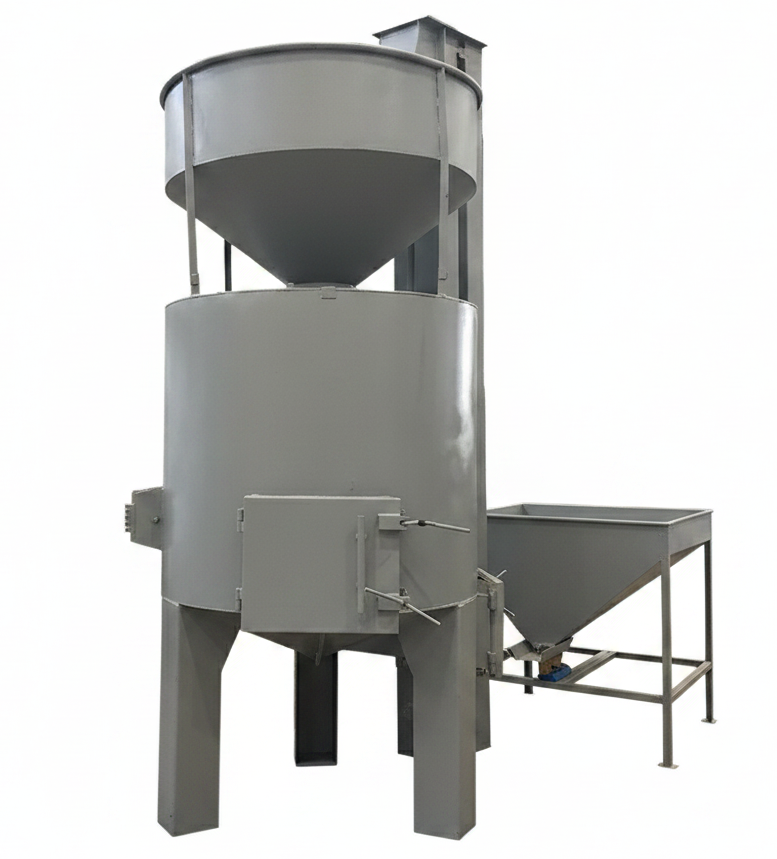
A standard workflow may include:
- Washing and cleaning
- Steam cooking or softening
- Shelling
- Drying
- Peeling
- Grading and packaging
Pre-cleaning and preparation systems are already proven to improve downstream efficiency and product quality . Drying continues this optimisation by stabilising moisture before final processing.
Key Benefits of a Cashew Nut Drying Machine
Consistent Moisture Control
Maintains target moisture levels around 3%.
Better Kernel Appearance
Prevents discoloration and uneven texture.
Reduced Breakage
Stabilised kernels are less fragile during handling.
Improved Production Efficiency
Continuous drying systems support higher throughput.
Lower Labour Dependency
Automation reduces manual monitoring and handling.
Features to Look For
When selecting a cashew nut drying machine, processors should consider:
- Stainless steel food-grade construction
- Adjustable temperature settings
- Uniform airflow circulation
- Energy-efficient heating system
- Continuous or batch drying options
- Easy cleaning and maintenance access
These features help ensure reliable long-term performance in demanding industrial environments.
Conclusion
A cashew nut drying machine is a crucial part of modern cashew processing operations. By reducing moisture content to approximately 3%, processors can achieve:
- Better product stability
- Improved export quality
- Reduced spoilage and waste
- Higher overall processing efficiency
In today’s competitive market, precise moisture control is no longer optional—it is essential for profitability and long-term success.
Summary Table
| Factor | Without Drying Machine | With Cashew Nut Drying Machine |
|---|---|---|
| Moisture Stability | Inconsistent | Controlled at ~3% |
| Risk of Spoilage | High | Low |
| Kernel Quality | Variable | Export-Grade |
| Processing Efficiency | Lower | Higher |
| Labour Requirement | Higher | Reduced |
| Shelf Life | Shorter | Extended |